Dubai Was An Economic Miracle, Then They Got Bombed
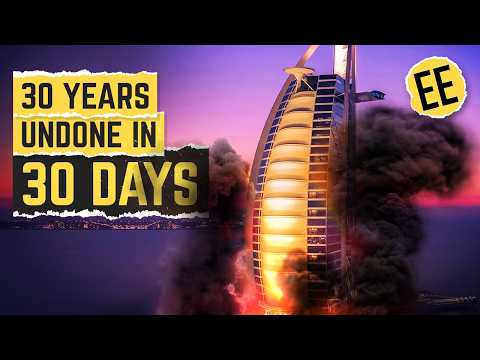 Watch on YouTube →
Overview
Dubai and other Gulf states leveraged low taxes, luxury facilities, and strategic infrastructure like Emirates airline to become global business hubs, attracting wealthy immigrants and diversifying their economies away from oil. However, this model, heavily reliant on real estate and continuous foreign capital inflow, is now threatened by regional instability and attacks, which have disrupted trade routes, damaged critical infrastructure, and eroded the confidence essential to their economic strategy.
Key takeaways
- Dubai's economic success was built on attracting wealthy individuals and businesses through low taxes and a perception of safety, masking underlying regional instability.
- The UAE's economy is now heavily reliant on real estate, with foreign nationals owning 43% of residential property value, making it vulnerable to shifts in foreign capital.
- Disruptions to the Strait of Hormuz threaten global oil and gas supplies, impacting major economies like China and India, and jeopardizing the UAE's import-dependent food security.
- Critical infrastructure like desalination plants are highly vulnerable to attack, posing an existential threat to populations in arid Gulf states.
- The perception of instability and crackdowns on expression erode the confidence that underpins Dubai's economic model, potentially leading to capital flight and a property market collapse.
- A slowdown in the Gulf's economy will disproportionately affect migrant laborers from countries like Pakistan and India, whose remittances are vital to their home economies.
Chapters
0:00
Dubai's Rise as a Global Business Hub
- Gulf states, particularly Dubai, marketed themselves as business hubs offering low taxes, easy residency, and world-class airlines.
- The strategy aimed to attract wealthy Westerners and businesses by providing a safe, modern commercial center between major population centers.
- This model relied on ignoring regional instability and human rights concerns for economic gain, attracting multi-millionaire immigrants.
10:01
Economic Diversification and Real Estate Dependence
- Dubai's non-oil GDP now constitutes 95% of its economy, with a population growth from 370,000 in 1990 to over 3.5 million, largely foreign nationals.
- The UAE attracted 6,700 millionaires in 2024, making it a top destination for high-net-worth migration.
- Despite diversification, the economy became overly dependent on real estate, which now surpasses oil's contribution, with 43% of residential property owned by foreign nationals as speculative assets.
16:41
Impact of Regional Attacks on Trade and Infrastructure
- Attacks have led to the closure of the Strait of Hormuz, disrupting oil and LNG exports critical to Asian economies and global supply chains.
- The UAE imports over 90% of its food, with 70% of imports transiting disrupted maritime routes, threatening food security.
- Vulnerable infrastructure, including power grids and desalination plants (99% of Qatar's drinking water), faces existential threats, potentially rendering regions uninhabitable.
Summary, takeaways, and chapters were generated by AI from the video's transcript and may contain errors. The video belongs to its creator, Economics Explained.