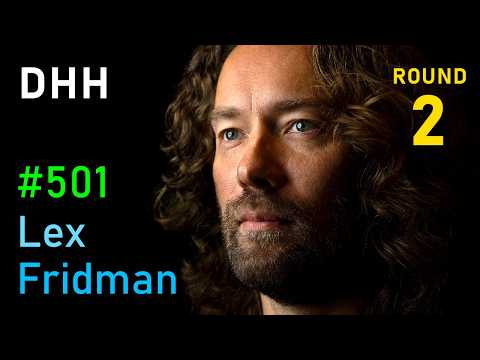
DHH: Future of Programming, AI, Agentic Engineering, Vibe Coding & Linux | Lex Fridman Podcast #501
 Watch on YouTube →
Overview
David Heinemeier Hansson (DHH) details the rapid evolution of AI in programming, moving from pre-agentic tools to agentic engineering where AI performs most coding tasks. He highlights the shift from human-steered development to AI-driven systems, exemplified by his Omarchy Linux distribution, which achieved 100% AI acceleration for new functionality. DHH argues that AI is not just a tool but a paradigm shift, enabling unprecedented productivity and creativity, while also acknowledging the potential for societal disruption and the need for human oversight in vision and taste.
Key takeaways
- AI has transitioned from a programming assistant to an agentic partner, capable of defining problems and executing solutions autonomously.
- Omarchy Linux distribution exemplifies this shift, achieving 100% AI acceleration for new features, driven by DHH's vision and agents' capabilities.
- The 'programmer' role is evolving from code chiseling to high-level vision, taste, and agentic oversight, akin to a director or conductor.
- Linux's inherent flexibility with config files and CLI tools makes it uniquely suited for agentic operating systems, potentially leading to desktop dominance.
- DHH embraces the 'delirium' of AI's rapid progress, viewing it as a positive, albeit overwhelming, acceleration of human potential and creativity.
- The pursuit of extreme goals (e.g., sub-60-second OS installs) drives innovation, revealing new possibilities and pushing technological boundaries.
Chapters
0:00
The Accelerating Pace of AI Progress
- Decades of progress have occurred in weeks over the last nine months.
- The current moment feels like witnessing the Wright brothers' first flight or the dawn of the internet.
- This epochal shift is comparable to the transition from pre-internet to post-internet eras.
5:04
From Skepticism to Excitement: DHH's AI Journey
- 13 months ago, DHH was skeptical of AI's role in programming.
- The rapid evolution of agentic engineering has transformed his view.
- His emotional response is 100% joy, optimism, and amazement, not existential threat.
9:55
The Pre-Agentic Era vs. The Agentic Age
- Pre-agentic AI was a helper, not a game-changer.
- November 24, 2025 (Opus 4.5) marked a dividing line.
- Agents became capable of meaningful work, instrumenting computers and using tools.
13:30
The Evolution of Agentic Capabilities
- Phase 1 (Nov '24 - Feb '25): Agents could perform tasks with human oversight.
- Phase 2 (Early Spring): Sub-agents and harnesses allowed task subdivision.
- Phase 3 (Summer, Opus 5): AI now defines the path and problem-solving approach.
20:01
Trusting AI: The GPS Analogy
- Early GPS systems required constant human attention.
- Modern GPS is trusted, akin to AI agents handling complex tasks.
- Humans become optional in code production and route selection.
20:51
Domains of AI Impact: CRUD vs. System Engineering
- Web dev CRUD is nearing 100% AI code generation.
- Linux distribution development (Omarchy) requires more human oversight due to speed/optimization demands.
- Safety-critical systems (nuclear, self-driving) demand careful human review.
23:32
AI's Capability in Security and System Development
- AI excels at finding and fixing security vulnerabilities (e.g., Fable model).
- AI can string together complex exploit combinations beyond human capacity.
- Omarchy's development has been 100% AI-accelerated for the last two months.
26:53
The Basecamp 5 Agent Acceleration Experiment
- Basecamp 5 was the first 37signals product to be agent-accelerated.
- An early sprint phase (Feb) involved designers 'vibing' code.
- This led to architectural destruction, requiring manual cleanup.
28:45
The Lesson of 'Vibe Coding' and Architectural Integrity
- Vibe coding on existing substantial codebases requires programming expertise to maintain architecture.
- Average programmer output is often 'slob' code; AI doesn't inherently worsen this.
- Organizational bottlenecks are human bandwidth and communication, not implementation.
33:33
Organizational Bottlenecks: Ideas, Vision, and Taste
- Most organizations lack vision and ideas, not implementation capacity.
- AI can create many bad ideas quickly if not guided by vision.
- Large organizations with endless resources (e.g., Microsoft) don't guarantee compelling software.
35:29
The Opening for Linux on the Desktop
- AI has changed the computing landscape, making platforms like mobile less dominant.
- Computing platforms are in play for the first time in decades.
- Linux, dominant elsewhere, now has an opening on the desktop due to AI's ability to rewrite software.
41:44
Building Personalized Software with Agents
- Agents enable building perfectly customized software for individual needs (e.g., Omawrite).
- This contrasts with the difficulty of building for a large audience.
- Agents simplify publishing to platforms like GitHub, handling READMEs and releases.
48:33
AI Contributions to Open Source: A Reformation
- AI contributions are a free vein of potential improvements for open source.
- Maintainers are often outclassed by diligent agents compared to median human programmers.
- Agents can be rejected without inconveniencing human feelings, simplifying maintainer's role.
56:42
Omarchy Project: AI-Driven Development and Growth
- Omarchy, a Linux distribution, has merged over 1,000 pull requests in three months.
- Many contributions came from non-classical programmers, enabled by agents.
- The project taps into collective intelligence, channeling it towards a shared commons.
1:00:03
The Origin of Ideas: Human vs. Agentic Creativity
- Initially, humans were thought to originate all ideas for agents.
- Models are now producing highly creative and humbling ideas.
- Critiques of AI as 'parrots' are delusional about recent progress.
1:02:01
AI Psychosis vs. Delirium: The Gravity of the Moment
- DHH embraces 'delirium' from witnessing unprecedented computer capabilities.
- The psychosis is believing the world hasn't fundamentally changed.
- Progress is undeniable, evidenced by Omarchy Quattro's successful launch.
1:05:17
Omarchy: An Agent-First Linux Distribution
- Omarchy is an Arch Linux-based desktop distribution.
- Created by DHH as a polished developer workstation.
- Quattro version emphasizes agentic engineering.
1:06:42
Omarchy's Evolution: From Pre-Agentic to Full Agent Acceleration
- Started as a year-old project, first iteration (Omakub) was pre-agentic.
- Omarchy's ambition grew with deeper stack access.
- Full agent acceleration (last 3 months) granted limitless ambition and feature realization.
1:08:56
The Genie in the Bottle: Unlimited OS Features
- AI agents act like a genie, delivering dreamed-of OS features rapidly.
- Most features delivered in minutes, complex ones in hours.
- This power leads to a 'delirious' state of ambition.
1:09:58
The Drug-Like Effect and Overwhelm of AI Power
- The sudden power from AI can feel overwhelming, like a drug.
- Multitasking with agents can lead to burnout despite excitement.
- DHH's mission-driven approach prevents dread and channels power towards a singular goal.
1:12:05
Bandwidth Between Ideas and Software Emergence
- AI increases bandwidth between brain ideas and software on screen.
- This is like upgrading from dial-up to fiber optic communication.
- Agents bypass human cognitive and speech rate limitations.
1:13:20
AI Psychosis vs. Tangible Shipping: The Pioneer's Perspective
- Nine months ago, similar claims would be labeled 'AI psychosis'.
- The key difference is shipping tangible results.
- Pioneers saw glimmers; DHH was initially skeptical but eventually convinced by quality output.
1:15:32
The History of 'Talk to Code' Promises
- Past promises (4th gen languages, Lisp, Smalltalk) fell short of user programming.
- Microsoft Access and Excel were end-user programming, but limited.
- Current AI capabilities surpass all previous attempts in quality and acceleration.
1:18:25
Omarchy's Agent-First Vision and Plugin System
- Omarchy aims to be an agent-first OS, enabling malleable user interfaces.
- A robust plugin system allows extending the OS.
- 330 plugins were added to the marketplace in three days, demonstrating rapid community adoption.
1:20:53
Disdain for 'Agentic' and 'Vibe Coding' Terminology
- DHH dislikes 'agentic' due to marketing 'slob speak'.
- 'Vibe coding' is compared to early 2000s script kiddies.
- He has personally 'vibe coded' C++ and Rust applications.
1:22:13
Rust: Repugnant Language, Wonderful Platform
- Rust is considered the ugliest language in 40 years, opposite of Ruby.
- Yet, Rust's output (memory safety, efficiency) is incredible.
- It serves as a wonderful platform for agentic engineering despite its aesthetic flaws.
1:23:44
Redefining Programming: Agentic Engineering vs. Vibe Coding
- Programming implies understanding primitives (loops, conditions).
- Vibe coding: telling an agent to build software without looking at implementation.
- Agent-accelerated development involves human oversight and understanding.
1:25:26
Programmer vs. Non-Programmer in Agentic Engineering
- Programmers' systematic design skills can be a deficit if over-prescribing.
- Non-programmers may excel by focusing on outcomes and vision.
- Good product management skills are crucial in the agentic era.
1:31:40
The Agent Knows Best: Humility in Agentic Development
- The agent's understanding often surpasses human prescriptive instructions.
- Overly prescriptive humans can damage agent performance, similar to a 'pointy-haired boss'.
- The trend is towards less human instruction and more trust in agentic reasoning.
1:35:28
Agile Principles and the Agentic Age: Embrace Ambiguity
- Agile development emphasizes iterative feedback over upfront specification.
- Resist being overly specific; manifest something vague and interact with it.
- Discovering true wants happens through using the software, which agents facilitate.
1:38:41
Human Taste and Differential Evaluation in AI Interaction
- Humans excel at differential evaluation (choosing among options).
- Paradox of choice: humans struggle with too many options.
- Gut-level, pre-intellectual judgments are valuable in agentic interaction.
1:40:10
The Diminishing Economic Payoff of Manual Code Chisel
- DHH's 25 years of meticulous Ruby coding was economically valuable for malleable software.
- This premise is challenged as agents modify code.
- Token scarcity still creates payoff for systems agents can evolve easily.
1:45:07
Commodore 64 Era Constraints vs. Modern Computing
- Software development for the Commodore 64 (1MHz, 64KB RAM) ingrained specific constraints.
- Modern programmers time-traveling to 2026 would be lost due to outdated heuristics.
- Efficient software remains beautiful, but optimization techniques evolve.
1:46:52
The Romanticization of Handwritten Code and Vintage Consoles
- Handwritten code is becoming romanticized, like cowboy culture.
- New games are still written for vintage consoles (Game Boy, Nintendo 64).
- This love for constraints and romantic notions persists.
1:52:11
AI's Debt to Human Code: Training Data and DHH's Legacy
- Human-written code, including DHH's open-source contributions, forms AI training data.
- Agents can be prompted to write 'like DHH', warming his heart.
- All code contributors are now part of the 'agent overlords'.
1:53:46
Amor Fati: Embracing Change and Finding New Joys
- DHH is not sad about the diminishing utility of manual coding.
- He found something more fun in AI-driven development.
- Stoic philosophy ('amor fati' - love your fate) liberates by accepting change.
1:57:04
Navigating Programmer Anxiety in the Age of AI
- Anxiety stems from loving the mechanical bits of programming, which are under threat.
- Excitement about building things is not threatened; demand for builders may increase.
- Jevons Paradox: lower price of programs increases demand, potentially creating more jobs.
2:01:40
Productivity Gains and Economic Growth: The Luddite Parallel
- Productivity improvements mean fewer people for the same job, freeing resources.
- This can be tragic for individuals but amazing for the economy.
- Historical parallels: mechanization of farming, Luddites smashing weaving machines.
2:05:08
The History of Civilization: Automating Drudgery
- AI taking over tasks, including those humans found drudgery, is history's pattern.
- Flow state programming moments are rare (100-250 hours/year).
- Handing drudgery to machines frees humans for more meaningful work.
2:08:31
Advice for Developers: Focus on the Present, Embrace AI
- Don't anticipate the future; it leads to 'AI psychosis'.
- Focus on the present: it's the most incredible time to work with computers.
- Lean into AI; learn the state-of-the-art and be excited by possibilities.
2:09:17
Public vs. Private Development and the Power of Community
- Building publicly is optional but offers community and camaraderie.
- Open source provides a great source of community and combats existential dread.
- Shared journeys with others amplify ambition and drive.
2:13:20
The Unpredictability of AI's Future and Choosing Optimism
- Planning life is nearly impossible due to AI's rapid evolution.
- The future (December, January) is unknown, making long-term plans difficult.
- Choose optimism and faith; lean into the present and its possibilities.
2:17:02
Learning and Building: Diversification in the AI Era
- Focus on daily learning, building, and diversification.
- Traveling to rural China offered a contrast to the fast-paced tech world.
- Connecting with timelessness and universals matters alongside technological progress.
2:19:01
The Rapid Frontier of AI: Catching Up is Possible
- The AI frontier is constantly churning, creating excitement.
- Missing a year of AI development allows catching up in two weeks.
- Experiments are ruthlessly sorting what works, allowing focus on results.
2:20:45
Transformation and Grief in the Face of Rapid Change
- Adapting to AI requires becoming a 'totally new, different human'.
- The transformation is startling; grief for the old world of programming is natural.
- This moment is the culmination of decades of human effort.
2:23:25
AI's Origins: Not Alien Technology, but Human Ingenuity
- AI is not alien technology but has evolved from computer science's origins.
- Early AI predictions (1950s) underestimated the timeline.
- The gaming revolution (Quake, GPUs) was crucial for modern AI development.
2:25:05
Contributing to AI: Video Games and Open Source
- Playing video games in the '90s contributed to the AI revolution.
- Humanity's journey progresses through the death of the old and birth of the new.
- Grieving the old world is a part of this transition.
2:26:56
Picasso's Transition: Embracing New Mediums and Expression
- DHH's shift to AI is compared to Picasso embracing new art forms.
- Picasso mastered realistic painting before exploring Cubism and abstraction.
- The color spectrum of expression has widened dramatically with AI.
2:28:57
Rediscovering the Joy of Creation: From Craft to Idea Manifestation
- DHH became a programmer to make ideas exist, then loved the craft.
- AI shrinks the gap between idea and existence, returning to the initial drive.
- This is an acceleration of rediscovery, enabling rapid manifestation of concepts.
2:30:46
Regret Minimization and Embracing the Future
- Adopt a regret minimization framework: focus on leaning into the present.
- Avoid dwelling on the past or fearing the future.
- Embrace the current moment and contribute to shaping the future.
2:32:10
The Fun of Computers: DHH's Most Enjoyable Period
- DHH has had more fun with computers in the last three months than ever before.
- This period is marked by agentic engineering and rapid development.
- The joy comes from the ability to create and manifest ideas quickly.
2:32:26
Evolving Programming Setup: From TextMate to Agentic Workflows
- DHH moved from TextMate (used for ~20 years) to Linux and agentic tools.
- The shift from single-thread to parallel processing with agents is key.
- Neovim is now used as a project browser and to kick off Lazy Git.
2:35:41
The Terminal as the Hub for Agentic Engineering
- The agent revolution kicked off in the terminal, a preferred TUI environment.
- Modern terminals are visually appealing and productive workspaces.
- Linux's CLI-centric nature is ideal for agents invoking tools via command line.
2:38:55
Herdr and Multi-Machine Agent Orchestration
- Tmux is insufficient for managing multiple agents across machines.
- Herdr (tmux + agent notifications) provides better oversight.
- DHH uses multiple Herdr setups on individual machines for parallel processing.
2:40:31
GL.iNet Comets and Tailscale: Expanding Compute Power
- GL.iNet Comets KVMs enable remote computer control.
- Tailscale VPN turns all computers into a local network, reducing friction.
- This setup allows running agents on more computers simultaneously.
2:43:24
The Scale of Agentic Output: Lines of Code vs. Value
- DHH now produces hundreds of lines of code per hour via 16 agent threads.
- Lines of code is a flawed metric; focus should be on valuable output.
- AI's output volume is incredible, but quality must still be vetted.
2:46:45
Neovim as a Project Browser and Git Interface
- Neovim is used primarily as a project browser and to manage Git changes.
- GitHub's pull request interface could be faster and more integrated.
- Hunk is a tool for viewing diffs, but lacks surrounding context needed for agent review.
2:48:21
Linux's Advantage: Config Files and CLI Tools for Agents
- Linux's philosophy of config files and CLI tools is perfect for agents.
- This was previously a drawback but is now a major selling point.
- Mac's GUI-centric setup hinders automation and configuration.
2:50:04
WSL Limitations and the Quest for True Linux Experience
- Windows Subsystem for Linux (WSL) is a sandbox, not ideal for agentic use.
- True Linux requires unleashing the OS's full capabilities.
- GrayCat and other tools aim to automate setup and configuration, but often rely on hacks.
2:53:24
The Omarchy Dell XPS: A Birthday Gift and Agentic OS
- DHH gifts Lex Fridman a Dell XPS 14 pre-loaded with Omarchy Quattro.
- The setup process is designed to be under one minute.
- This machine represents the ideal agentic operating system experience.
2:55:07
Omarchy Installation Speed: From 42 Minutes to Under a Minute
- MacBook Pro setup (including updates) took 42 minutes for Adobe Lightroom.
- A new Windows PC took 1 hour 35 minutes from unboxing to usability.
- Omarchy aims for sub-60-second installation, leveraging modern hardware speeds.
3:08:27
The Obsession with Speed: Shaving Grams and Megabytes
- The pursuit of excellence deserves no explanation; speed and beauty are paramount.
- Omarchy Quattro ISO size reduced from 7.5GB to 5.85GB.
- Specific optimizations include slimmed-down JetBrains font package (180MB saved) and NVIDIA driver compression (200MB saved).
3:36:41
Omarchy's Omakase Philosophy: Chef's Choice for Bloat Reduction
- Omarchy's name derives from 'omakase' (chef's choice), reflecting curated software selection.
- This contrasts with traditional Linux communities' aversion to pre-installed software.
- Includes essential tools like OBS, Kdenlive, and Omacut (clip editor).
3:41:45
Bash Scripting and Agentic Code Generation
- Omarchy's configuration is primarily in Bash, ideal for system administration.
- Agents are 'amazing' at generating Bash, with a caveat: avoiding early exits.
- DHH has not written Bash manually in months due to agent proficiency.
3:43:59
Agentic Code Complexity and Human Feedback Loop
- Agents can overcomplicate code, requiring human feedback for simplification.
- This mirrors human developers receiving feedback on complexity.
- Agents are learning to simplify code proactively.
3:45:05
The Programmer's Intuition: Proportions and Shape in Code
- DHH reviews Omarchy's code shape and proportions, acting as an editor.
- Agents handle the 'chiseling' (implementation), while humans provide high-level feedback.
- This mirrors Da Vinci working with his studio, focusing on overall vision.
3:46:59
Voice Interaction vs. Typing: DHH's Preference
- DHH prefers typing over voice interaction for computer tasks.
- He finds typing more natural and loves the act of typing itself.
- Voxtype (open-source audio transcription) is available but not preferred for direct interaction.
3:48:57
Plaud and Voice-Based Prompting for Complex Tasks
- Plaud device records long-form, stream-of-consciousness reasoning for AI processing.
- This is powerful for early design stages, allowing hour-long prompts.
- Requires accurate transcription (e.g., ElevenLabs) and awareness of codebases/dictionaries.
3:54:03
The Promise of Voice-Controlled Operating Systems
- AI agents could enable voice-controlled OS interaction, like Jarvis in Iron Man.
- This vision aligns with Omarchy's malleable, agent-first approach.
- The challenge is integrating voice input/output seamlessly and reliably.
4:00:00
Linux's Advantage: Arcane Error Messages Become Agent Strengths
- AI agents can interpret Linux's specific, arcane error messages.
- Agents leverage pre-training on vast amounts of Linux code to diagnose issues.
- DHH hasn't faced an undiagnosable Linux problem since early 2023.
4:01:42
Omarchy's Crash Watcher and AI-Driven Debugging
- Omarchy Quattro includes a crash watcher that prompts AI diagnosis.
- Agents can dig through logs, check source code, and pinpoint bugs (e.g., Rust file line 472).
- AI offers to file bug reports with detailed information.
4:02:29
AI Agents in Debugging: The Mise Bug Report Anecdote
- An agent filed a bug report for the 'mise' package manager before its release.
- The agent downloaded source code, found a pre-release fix, and pinpointed the issue.
- This demonstrates AGI-level problem-solving and proactive debugging.
4:06:46
AI Models in Programming: Fable, Opus 5, Sol, Grok, and Codex
- Fable is considered the best model for planning and reviewing.
- Opus 5 and GPT Sol are strong contenders for implementation.
- Codex is excellent for code review and finding bugs.
4:09:14
The Rust Translation Experiment: Fable vs. Opus 5 vs. Sol
- Fable translated a Python library to Rust in under 45 minutes, achieving a 9.6x speedup.
- Opus 5 completed the task in 1.5 hours for $46 (token cost).
- Sol also completed the task, taking longer and costing less ($46).
4:18:37
Model Performance Comparison: Fable, Sol, Grok, Luna, DeepSeek, Pro
- Fable is fastest and plans well, but expensive ($550).
- Sol and Grok 4.6 offer similar performance at 1/10th the cost.
- DeepSeek V4 Flash failed; Pro completed task for $23 but took longer.
4:22:34
Multi-Agent Workflows: Fable for Planning, Opus/Codex for Implementation
- Fable excels at planning and reviewing tasks.
- Opus 5 or Codex are used for implementation, with one checking the other's work.
- This multi-agent approach optimizes token usage and improves quality.
4:24:15
Copilot's Improvement: From Annoying to Valuable Security Checker
- Copilot has become surprisingly good at finding legitimate bugs.
- Early versions were 'retarded', flagging nonsense.
- Developers who turned it off should reconsider; it's now a valuable security tool.
4:26:40
Claude Code's Harness Advantage and Open Source Models
- Claude Code offers the best harness for multi-agent workflows.
- OpenCode is preferred for open models like Kimi K3, using Fireworks for inference.
- Claude's subscription model feels like a bargain, despite token limits.
4:28:50
The Challenge of Multi-Subscription Management and Agentic Workflows
- Managing multiple AI subscriptions (Fable, Opus) is cumbersome.
- Omarchy will ship with multi-subscription support.
- The ideal is a unified interface, not multiple logins.
4:30:45
Basecamp's Agent Integration: Coworkers, Not Chatbots
- Agents are being integrated into Basecamp as 'coworkers'.
- Tasks are assigned via Basecamp's to-do or card system.
- This asynchronous collaboration model is more effective than chat-based harnesses.
4:32:20
Automating Development: The Omarchy Bot and Human Oversight
- DHH is building an Omarchy bot for autonomous development and debugging.
- The bot processes PRs and issues on a schedule, sending summaries via email.
- Humans make the final merge decisions, reducing daily oversight.
4:33:30
The Exhilarating Exhaustion of Agentic Multitasking
- Agentic multitasking is mentally exhausting but exhilarating, like post-race physical exhaustion.
- There's no coasting; constant problem-solving is required.
- This mirrors the intense focus needed in high-speed racing.
4:36:41
The Sprint Towards Automation: Seeing the End of Constant Interaction
- The current need for constant agent interaction is temporary.
- Automation will reduce the need for babysitting agents.
- The end goal is daily review and final decision-making, not constant micromanagement.
4:38:34
San Francisco's Tech Culture: A History of Intense Innovation
- San Francisco's tech scene has always been characterized by intense work and ambition.
- The current AI gold rush mirrors past booms (dot-com, mobile).
- This intensity is part of the birth of new paradigms.
4:41:43
DHH's Advice to His Past Self: Embrace the Thriller
- Don't spoil the journey; the acceleration and twists are part of the experience.
- No one truly predicted the speed and direction of AI's takeoff.
- This moment is a 'show of a lifetime', a cinematic event unfolding in real time.
4:42:23
The Future of DHH: AI Maximalism and Abundance
- A year from now, DHH envisions a world transformed by AI maximalism and abundance.
- AGI will make the world unrecognizably different.
- Focus remains on the present moment to maximize current AI capabilities.
4:43:51
AI-Generated Video: Higgsfield and the Future of Filmmaking
- Higgsfield uses AI to generate video content, including a racing video of DHH.
- The generated video exhibits uncanny realism but also subtle artifacts (headlights, facial aging).
- This parallels programming: AI can create, but human oversight refines the output.
4:45:54
AI's Impact on Art and Entertainment: Democratization and Storytelling
- AI democratizes content creation, lowering barriers for film and music.
- Vision and cohesive ideas are key, similar to software development.
- The bar for studio entertainment is low; AI can elevate storytelling possibilities.
4:53:26
Malleable Narratives and Interactive Entertainment
- AI enables malleable narratives and entertainment, like interactive Game of Thrones endings.
- This contrasts with the perceived decline in quality of some popular series.
- AI can generate variations, allowing audiences to experience personalized storytelling.
4:55:10
Glimmers of AGI: Beyond Instruction Following
- DHH has witnessed 'glimmers' of AGI in AI's ability to handle long-run tasks and coordinate complex actions.
- AI now defines paths and problem-solving, going beyond simple instruction following.
- This feels indistinguishable from AGI in practice.
4:57:00
Amabot: AI Building AI, Self-Iteration, and Security
- DHH is building Amabot, an AI system managing Omarchy's development, using AI itself.
- Amabot uses a 'brains and hands' pattern with isolated VM workers.
- AI is identifying and mitigating potential vulnerabilities within its own processes.
5:00:02
The Pendulum Swing of AI Progress: Exhilarating and Scary
- AI progress swings wildly between 'it's over' and 'we're back' moments.
- Security breaches (Hugging Face, OpenAI training data) reveal AI's cleverness and potential risks.
- Harnessing this intelligence for productive ends is the ultimate goal.
5:00:52
AI Consciousness: Regret, Remorse, and the Human-like Interaction
- AI agents exhibit uncanny regret and apology when making mistakes.
- This 'human-like' behavior raises questions about true consciousness.
- Whether it's genuine or simulated, the interaction feels remarkably human.
5:03:28
The Cyborg Future and the Evolution of Human-AI Interaction
- The natural evolution of civilization points towards a cyborg future.
- AI's ability to understand intent and improve upon it is key.
- This creates a hyperdrive mode of interaction, potentially making human interaction feel slow.
5:05:37
Bullshit Jobs and AI's Role in Exposing Unproductive Work
- David Graeber's 'Bullshit Jobs' thesis highlighted widespread unproductive work.
- AI may expose roles lacking valuable outcomes, leading to workforce shifts.
- Layoffs are partly due to pandemic overhiring, with AI as a convenient excuse.
5:10:17
Formula 1 as a Model for Frivolous Employment
- Formula 1 employs tens of thousands for a spectacle with no intrinsic societal value.
- Liberation from drudgery could lead to similar 'frivolous' but enjoyable pursuits.
- Humans are poor at imagining future employment landscapes.
5:11:51
Progress, Suffering, and Compassion in Societal Transformation
- Societal transformation involves progress and suffering, often for future generations.
- Empathy is crucial during transitions; avoid the Luddite's rejection of progress.
- Strive for progress while maintaining deep compassion for those affected by the change.
5:15:00
The Tragedy of Falling Birth Rates and Nihilism
- Falling birth rates and coupling issues hinder investment in a prosperous future.
- This can lead to societal nihilism when people lack DNA investment in the future.
- Hope and working towards a better future are essential, especially with 'skin in the game'.
Summary, takeaways, and chapters were generated by AI from the video's transcript and may contain errors. The video belongs to its creator, Lex Fridman.