CS50x em Português - Inteligência Artificial
 Watch on YouTube →
Overview
CS50 introduces generative artificial intelligence, explaining its evolution from early AI concepts to modern tools like the CS50 Duck, which acts as a less assistive GPT-4. The course demonstrates AI's capabilities through interactive games distinguishing AI-generated content from human work, and explores AI's role in programming assistance with tools like GitHub Copilot. It delves into machine learning, reinforcement learning, and neural networks, highlighting how these technologies learn from data to perform complex tasks, from playing games like Breakout and Tic-Tac-Toe to generating text and code.
Key takeaways
- The CS50 Duck, an AI assistant, has evolved from simple quacks to providing English answers, aiming to guide students rather than directly give solutions.
- AI tools like GitHub Copilot can significantly accelerate programming by suggesting code, allowing developers to focus on higher-level problem-solving.
- Machine learning, particularly reinforcement learning, enables AI to learn complex tasks through trial-and-error, rewards, and punishments, as demonstrated by a robot learning to flip pancakes.
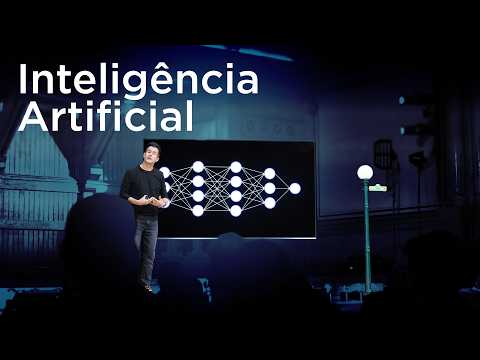
- Neural networks, inspired by biological neurons, form the basis of deep learning and LLMs, processing information through interconnected nodes and learning by adjusting parameters.
- Large Language Models (LLMs) like GPT are statistical models trained on massive text datasets, predicting the next word in a sequence, which can sometimes lead to 'hallucinations' or incorrect outputs.
- The distinction between human and AI-generated content is becoming increasingly blurred, posing challenges for detection in areas like text and image generation.
Chapters
- The CS50 Duck evolved from a simple 'quack' response to an English-answering AI assistant.
- Generative AI creates content like images, sounds, videos, or text.
- An interactive game challenges the audience to distinguish AI-generated images and text from human-created ones.
- AI-generated faces that don't exist in reality highlight the technology's advancement.
- Distinguishing AI-written text from human text becomes increasingly difficult.
- The rapid progress suggests distinguishing AI from human output will become harder in the future.
- The CS50 Duck uses APIs from third-party services like OpenAI and Microsoft.
- Prompt engineering involves crafting detailed instructions to guide AI responses.
- A system prompt defines the AI's persona (e.g., 'friendly CS50 teaching assistant') and constraints (e.g., academic honesty).
- The OpenAI library allows integration of AI models into custom code.
- User input is captured using the `input()` function.
- A `client.chat.completions.create` function sends user and system prompts to the AI model.
- GitHub Copilot provides real-time code suggestions within the VS Code environment.
- It analyzes existing code (e.g., `dictionary.c`) to provide contextually relevant suggestions.
- Copilot can implement functions like `verification` and `load` based on comments and code structure.
- AI tools like Copilot can significantly speed up coding by automating repetitive tasks.
- Programmers still need foundational knowledge to guide AI and review its output.
- AI allows developers to focus on higher-level problem-solving and design.
- AI is used in spam detection, handwriting recognition, and recommendation systems (e.g., Netflix).
- Early AI in games like Pong and Breakout used decision trees and algorithmic approaches.
- These games demonstrate how AI can follow rules to achieve objectives.
- Minimax is an algorithm used in AI for decision-making in zero-sum games like Tic-Tac-Toe.
- It involves maximizing one's own score while minimizing the opponent's score.
- The complexity of game trees (e.g., Chess, Go) necessitates more advanced AI techniques than simple rule-based systems.
Summary, takeaways, and chapters were generated by AI from the video's transcript and may contain errors. The video belongs to its creator, CS50.