Cloning, BIO105 Introductory Biology, David Champlin, USM
 Watch on YouTube →
Overview
Cloning experiments by John Gurdon showed that differentiated cells retain the genetic information needed to produce an organism, supporting genomic equivalence and cellular totipotency. Shinya Yamanaka later used gene-expression comparisons to identify four transcription factors—Oct4, Sox2, Klf4, and c-Myc—that reprogram ordinary cells into induced pluripotent stem cells, a promising approach whose growth effects also raise cancer concerns.
Key takeaways
- Gurdon's frog nuclear-transfer experiments showed that nuclei from differentiated cells can support development when placed in an enucleated egg, demonstrating that specialization does not ordinarily erase the genome.
- Cell identity depends largely on which genes are active: stem cells and specialized cells can contain the same DNA while expressing different gene sets.
- Yamanaka used gene-expression comparisons to identify four factors—Oct4, Sox2, Klf4, and c-Myc—that can reprogram ordinary cells into induced pluripotent stem cells.
- iPSCs offer a potential route to patient-specific replacement cells, such as insulin-producing pancreatic cells, but therapeutic use depends on controlling differentiation and growth.
- Because c-Myc promotes cell growth and is an oncogene, reprogramming methods that use it carry a cancer-related safety concern.
Chapters
0:00
Nuclear Transfer and John Gurdon's Evidence for Genomic Equivalence
- Most body cells contain the organism's full diploid genome, although different cell types activate different subsets of genes.
- In nuclear transfer, a donor-cell nucleus is placed into an egg whose own nucleus has been removed; the resulting embryo can develop into an organism with the donor nucleus's DNA.
- John Gurdon transplanted nuclei from tadpole and developing frog cells into enucleated frog eggs, which developed into tadpoles.
- Gurdon's results provided early evidence that differentiated cells retain the genes needed to make an entire organism.
5:45
Yamanaka's Reprogramming of Cells into Induced Pluripotent Stem Cells
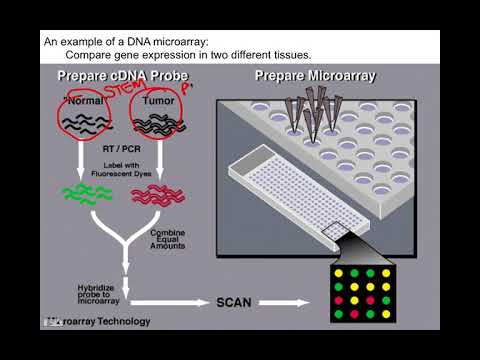
- Shinya Yamanaka compared stem-cell and precursor-cell gene expression, using DNA microarrays to identify genes active in stem cells.
- Stem cells can self-renew while also producing precursor cells that differentiate into specialized types, such as blood or skin cells.
- Yamanaka found that expressing four genes in ordinary cells could reprogram them into induced pluripotent stem cells (iPSCs).
- Patient-derived iPSCs could potentially supply replacement cell types for regenerative medicine, including insulin-producing pancreatic cells.
12:35
The Four Transcription Factors and the Cancer Risk of Cell Reprogramming
- The four reprogramming factors are Oct4, Sox2, Klf4, and c-Myc; each acts as a transcription factor that can regulate many target genes.
- Turning on these factors can activate gene-expression programs associated with stem-cell identity and self-renewal.
- The growth-promoting factor c-Myc is also an oncogene, and its involvement highlights a potential cancer risk when stimulating stem-cell-like growth.
- Gurdon and Yamanaka received the 2012 Nobel Prize in Physiology or Medicine for discoveries establishing nuclear reprogramming and cellular plasticity.
Summary, takeaways, and chapters were generated by AI from the video's transcript and may contain errors. The video belongs to its creator, The New Evolution for Everyone.