Chemical Reactions, BIO105 Introductory Biology, David Champlin, USM
 Watch on YouTube →
Overview
David Champlin introduces cellular energetics as the study of how cells rearrange covalent bonds to release and use energy. He connects food breakdown, sucrose hydrolysis, and glucose oxidation to the broader idea that cells manage energy through many controlled reactions rather than releasing it all at once as heat; chapters 8 and 9 are on the midterm, while chapter 10 covers photosynthesis and is not.
Key takeaways
- Chemical reactions rearrange covalent bonds, and changes in how atoms such as carbon share those bonds can shift a molecule's potential energy.
- Hydrolysis uses water to split sucrose into monosaccharides and is also an early step in breaking down polymers such as proteins, DNA, and RNA.
- Glucose oxidation in cells and cellulose combustion in a fire both produce carbon dioxide and water, but cells release energy through controlled steps rather than one abrupt burst of heat.
- A reaction can release energy overall yet still need an initial trigger: the energy barrier explains why glucose and wood do not spontaneously combust.
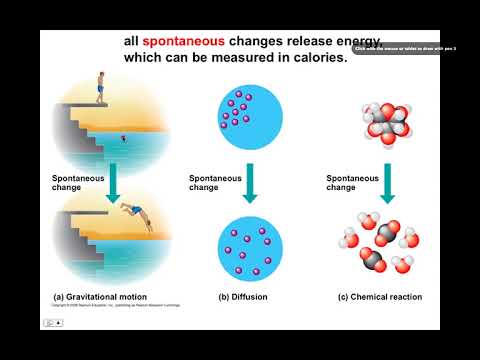
- Fats contain more energy per mole than sugars, while energy in cells can also be stored in concentration gradients, as illustrated by water moving across a membrane.
- Cellular respiration includes many reactions, with the citric acid cycle taking place in mitochondria; the central learning goal is to follow energy flow through these steps.
Chapters
0:00
Cellular Energetics: Covalent Bonds and Metabolism
- Chapters 8 and 9 cover cellular energetics and cellular respiration and are included on the midterm; chapter 10 covers photosynthesis and is excluded.
- A chemical reaction breaks and forms covalent bonds; carbon can retain four bonds while changing which atoms it shares them with.
- Food molecules such as sugars contain chemical potential energy that cells can release and use to do work or synthesize proteins, DNA, and phospholipids.
- Metabolism includes catabolism, which breaks down molecules and releases energy, and synthesis, which requires energy to build molecules such as aquaporin.
4:55
Hydrolysis and the Energy Released by Glucose Oxidation
- Hydrolysis adds water to split sucrose, a disaccharide, into two monosaccharides.
- Hydrolysis also helps begin the breakdown of biological polymers, including proteins, DNA, and RNA, into their constituent units.
- Wood combustion oxidizes cellulose, a glucose-based polysaccharide, to carbon dioxide and water; cells also break down glucose and exhale carbon dioxide.
- Combustion releases energy largely as heat, whereas cells capture some energy from food breakdown for cellular work.
8:30
Potential Energy, Reaction Barriers, and Stepwise Cellular Respiration
- Although glucose oxidation releases substantial energy, wood and glucose do not spontaneously combust; a reaction barrier prevents immediate energy release.
- Energy changes can be described in calories or joules per mole; Champlin compares molecular potential energy to a diver moving from a higher level to a lower one.
- Fats store more energy per mole than sugars, illustrating how the organization of a molecule's covalent bonds represents potential energy.
- Cells break glucose down through many controlled reactions, including steps in the mitochondrial citric acid cycle, capturing energy incrementally rather than releasing it all as fire does.
Summary, takeaways, and chapters were generated by AI from the video's transcript and may contain errors. The video belongs to its creator, The New Evolution for Everyone.