BIO105 Summer 2024, Getting Started with our course
 Watch on YouTube →
Overview
BIO 105 at the University of Southern Maine is a compressed, seven-week summer course built around recorded mini-lectures, four in-person meetings, textbook reading, and multiple-choice exams. The course plan prioritizes handwritten notes submitted as photos or PDFs, regular practice quizzes, and a cumulative final while guiding students through Brightspace, the Campbell biology textbook, and USM learning-support resources.
Key takeaways
- Students should secure the Campbell textbook by week two; the 11th edition is acceptable, and selected opening chapters are temporarily available through USM Brightspace electronic reserves.
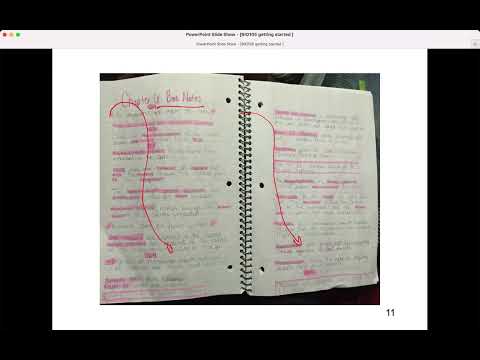
- Handwritten notes are a required part of participation: students take notes on every mini-lecture, photograph or scan them, and email them to the instructor.
- Mini-lectures are the primary exam-preparation resource and should come before textbook reading; most exam questions come from lectures, class meetings, or handouts.
- The seven-week course includes four in-person meetings and three multiple-choice exams of about 70 questions each, with the final covering the entire course.
- Chapter 2 notes are a specific early assignment, while take-home quizzes provide practice with the multiple-choice format and question wording.
- BIO 105 centers on molecules and cells; its water unit studies water's molecular chemistry and its effects on cellular life rather than focusing on bodies of water.
Chapters
0:00
BIO 105 Setup: Textbook, Brightspace, and Electronic Reserves
- BIO 105 lecture and BIO 106 lab are separate USM courses; students who need the lab must enroll in it separately.
- Get the Campbell biology textbook; the 11th edition is acceptable, and the 12th edition is not required.
- For the first week, selected chapters are available through Brightspace Content → Electronic Reserves; students need their own book by the second week.
- Brightspace is used mainly for numbered announcements, which generate email at the student's USM address.
5:02
Recorded Mini-Lectures and Handwritten Notes as the Core Study Routine
- The course has four in-person meetings; recorded mini-lectures provide most of the instruction and can be paused or replayed.
- Students must take handwritten notes for every mini-lecture, photograph the pages, and email them as a PDF or image files.
- Mini-lectures should be watched before reading chapters because exam questions primarily draw from lectures, class meetings, and handouts.
- Keep notes organized for the cumulative final, write down questions while studying, and use email or Zoom meetings to resolve confusion.
14:35
Seven-Week Calendar, Exam Rhythm, and First-Week Assignments
- The first class meeting is Tuesday, May 14, 2024; the accelerated course moves through roughly 20 textbook chapters in seven weeks.
- The first two weeks begin with chapters 1–4 and then chapters 5–7; the first exam is planned for around week three and may include some chapter 8 material.
- Three multiple-choice exams are scheduled roughly two weeks apart, with about 70 questions per exam; the final covers the whole course.
- Students should read chapters 1–4, submit notes for chapter 2, complete take-home practice quizzes, and watch for due dates and Brightspace handouts.
19:00
Syllabus, Grade Components, Instructor Contact, and USM Support
- The syllabus is available in Brightspace; the course does not distribute printed syllabi or routine paper handouts.
- Exams, practice quizzes, and required mini-lecture and assigned chapter notes contribute to the final grade; exam contributions increase over the term.
- Email the instructor with “BIO 105” in the subject line, and resend if a response is delayed; meetings can be arranged in person, by Zoom, or by phone.
- USM's Learning Center or Learning Commons provides BIO 105 tutoring, appointments, and study-skills resources.
24:45
Course Themes: Molecules, Cells, and Water Chemistry
- The seven-week schedule moves through several chapters each week, with the final exam emphasizing newer material while remaining cumulative.
- BIO 105 focuses on molecules and cells, narrowing the textbook's broad introduction to biology into a set of recurring core concepts.
- Chapter 3 examines water at the molecular level: its chemistry and how molecules and cells behave in aqueous environments.
- The course connects foundational biology to an actively expanding field and aims to make the science engaging for students.
Summary, takeaways, and chapters were generated by AI from the video's transcript and may contain errors. The video belongs to its creator, The New Evolution for Everyone.