BIO105 Introductory Biology, Going Over Our Syllabus, David Champlin, USM
 Watch on YouTube →
Overview
David Champlin outlines BIO105 at the University of Southern Maine (USM), explaining how to contact him, find the first five textbook chapters in Brightspace electronic reserves, and connect coursework with advising and paid off-campus internships. He also sets expectations for attendance, recorded lectures, exams, possible technology disruptions, and responsible AI use: AI can support learning, but outside examples may not fit the course and can weaken exam answers.
Key takeaways
- For meetings with David Champlin, email him with a day or two of lead time and several available times; office hours may not find him at his office because he also works in a nearby research lab.
- Students can begin BIO105 reading before obtaining the textbook by accessing its first five chapters through Brightspace Electronic Reserves and the Ares course link.
- BIO105 is an in-person course where class content is especially important for exams; YouTube recordings are a backup, not a substitute, and students who miss class must submit notes showing participation.
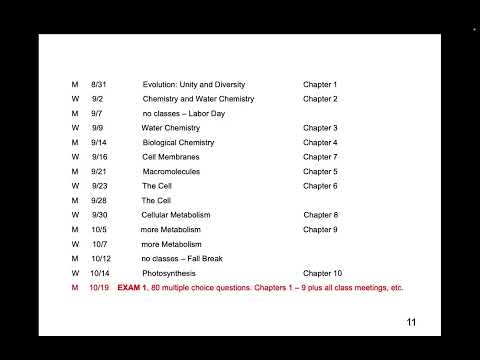
- The first multiple-choice exam covers the textbook's first nine chapters, while practice quizzes help students prepare; the final exam takes place in a different building.
- AI can help students learn, but answers that import outside examples instead of using BIO105's taught examples may be marked down as a misapplication even when the outside information is accurate.
- Champlin encourages students to use faculty advising and USM opportunities, including paid off-campus internships, to combine biology coursework with hands-on STEM experience.
Chapters
0:00
Contacting David Champlin and Getting Started with the BIO105 Textbook
- Email David Champlin with a day or two of notice and a few possible meeting times; meetings can be in person or on Zoom.
- Champlin can advise on biology requirements, other USM majors and courses, career interests, and paid off-campus internships for STEM students.
- The first five textbook chapters are available through Brightspace under course content and Electronic Reserves via the Ares course link; students still need to obtain the textbook.
- BIO105 is the first course in a one-, two-, or three-semester introductory biology sequence, depending on a student's biology pathway.
4:59
BIO105 Attendance, Lecture Recordings, Technology, and Exam Expectations
- Champlin records lecture meetings and uploads them to YouTube, but exams draw heavily from in-class material and recordings may occasionally fail.
- Students who miss class should sign the attendance sheet only for themselves and submit notes to demonstrate participation; they are expected to attend almost all meetings.
- If attendance or course logistics become difficult, students should contact Champlin during the semester, not wait until the end to request changes.
- Exams are multiple choice, with quizzes for practice; the first exam covers the first nine textbook chapters, and the final is scheduled in a different building.
- Brightspace gradebook setup may not work; if it cannot be resolved, assignments may be submitted by email and grades returned in email replies.
10:06
Champlin’s AI Policy: Use Tools to Learn, Not to Replace Course-Specific Examples
- Champlin supports using AI to learn biology topics or improve writing, but not to have AI complete assignments or write papers.
- AI-generated information can be factually correct yet still be a poor answer for BIO105 if it replaces examples taught in class.
- Champlin calls bringing in correct-but-irrelevant material a misapplication; the course uses a recurring skin-cancer case example to build focused understanding.
- Students are encouraged to discuss their AI use with Champlin, while developing course knowledge without relying on AI alone.
- USM resources include the Student Learning Center tutoring, a career center, counseling support, and student clubs.
Summary, takeaways, and chapters were generated by AI from the video's transcript and may contain errors. The video belongs to its creator, The New Evolution for Everyone.