Athena, Demeter and Dionysus | The Worship of Ancient Gods before Christianity
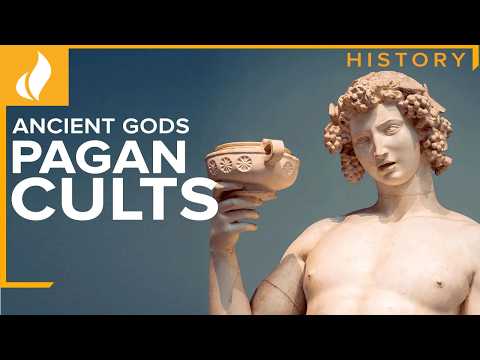 Watch on YouTube →
Overview
The Great Courses argues that civic cults and mystery religions served different social functions in ancient polytheism: public festivals like Athena Polias in Athens reinforced the polis, while Demeter, the Eleusinian Mysteries, and Dionysus offered secret initiation, female-only communities, and promises of help after death. The lecture uses concrete ritual details — the Panathenaia’s all-night choruses, competitive games, procession, and sacrificial feast; the Thesmophoria’s three-day camping and pig offerings; and the Eleusinian initiation sequence with fasting, bathing, a nocturnal march, and a prohibited revelation — to show how religion could both integrate and unsettle Greek and Roman civic life.
Key takeaways
- Athena Polias functioned as a civic goddess of Athens, and the Panathenaia turned religion into a citywide political festival with contests, a procession, and animal sacrifice.
- The Panathenaia’s scale mattered: the lesser version was annual, while the greater version occurred every fourth year and added multiple days of competitions before the main procession.
- Women were not absent from Greek religion; they gained public visibility in Athena’s procession and exclusive authority in rites like the three-day Thesmophoria for Demeter.
- The Eleusinian Mysteries used disciplined preparation — fasting, sea bathing, nocturnal vigils, and a march to Eleusis — to create secrecy, initiation, and a promise of afterlife assistance.
- Dionysian worship was socially disruptive because it removed women from the home, encouraged nocturnal gatherings, and symbolized a challenge to male civic control.
- Ancient states could accommodate many gods, but they treated mystery cults as politically sensitive when they formed independent communities outside the family and polis.
Chapters
- Sets up three case studies: Athena Polias in Athens, Demeter in Athens and Eleusis, and Dionysus across Greece and Italy.
- Contrasts public state cults with mystery religions that required secret initiation away from the public eye.
- Notes that polytheistic tolerance had limits, especially for Dionysian worship that could attract suspicion or persecution.
- Explains Athena’s epithet Polias as the goddess of the polis and links it to the mythic contest with Poseidon.
- Tells the Erichthonius birth myth: Hephaestus’ failed assault, Athena’s hidden child in a box, and the daughters of Cecrops peeking inside.
- Describes the Panathenaia on 28 Hecatombaeon, with lesser annual and greater quadrennial versions, athletic contests, poetry, horse and chariot races, and the peplos for Athena.
- Details the procession’s sacrificial route: victors, priests, army officers, elders, young men, girls, and women carrying baskets.
- Interprets the Parthenon frieze as riders, chariots, musicians, water bearers, sacrificial cattle, gods, and the new peplos.
- Emphasizes that public religion gave women rare civic visibility outside the household, especially through the annual weaving of Athena’s cloak.
- Presents Demeter as the goddess whose gift of grain makes human life possible, and the mother of Persephone/Cora.
- Summarizes the Persephone myth: Hades abducts her, Demeter’s grief destroys fertility, and Zeus negotiates her return except for the pomegranate-seed condition.
- Contrasts the Thesmophoria’s three-day female-only rites — fasting, lewd songs, camping, and pig sacrifices — with the mixed-gender Eleusinian Mysteries at Eleusis.
- Outlines Eleusinian initiation requirements: an early instructor, fasting, avoidance of pomegranates and beans, bathing at sea, all-night vigils, and a long walk to Eleusis.
- Reports that divulging the mysteries was punishable by death and that Aeschylus was once accused of revealing them.
- Shows how Dionysus/Bacchus combined intoxication, female ecstatic worship, and political danger, culminating in Pentheus’ death in Euripides’ Bacchae and Rome’s 186 BCE crackdown.
Summary, takeaways, and chapters were generated by AI from the video's transcript and may contain errors. The video belongs to its creator, The Great Courses.