Arthur Schopenhauer's Philosophy - Bryan Magee & Frederick Copleston (1987)
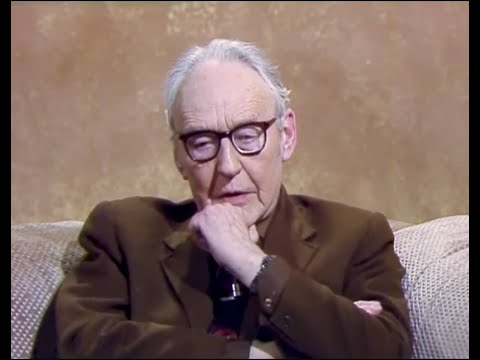 Watch on YouTube →
Overview
Bryan Magee and Frederick Copleston explain Arthur Schopenhauer’s system as an extension of Kant: the experienced world is shaped by human perception, while an undifferentiated reality beneath it is encountered most closely through the body and named the Will. They examine how this metaphysics informs Schopenhauer’s pessimism, his account of art and compassion, and his proposed denial of the Will, then trace his influence on Nietzsche, Freud, Wittgenstein, and major artists.
Key takeaways
- Schopenhauer extends Kant’s distinction between appearances and things-in-themselves by arguing that space, time, and causality create phenomenal plurality, while reality beyond them must be one and undifferentiated.
- Schopenhauer uses a person’s immediate inner experience of their body as a clue to the thing-in-itself, but acknowledges that unconscious motives and the limits of time-bound experience prevent complete self-knowledge.
- The metaphysical Will is an impersonal, unconscious striving present throughout nature; calling it “Will” risks implying intention or personality that Schopenhauer explicitly denies.
- Aesthetic contemplation provides temporary relief from Schopenhauer’s cycle of desire by allowing disinterested attention, and he treats art as a way of knowing rather than merely expressing emotion.
- Schopenhauer grounds compassion in the ultimate oneness of individuals, though Copleston questions how that ethical conclusion fits with Schopenhauer’s bleak evaluation of the underlying reality.
- Schopenhauer’s ideas shaped Nietzsche’s early view of intellectual independence and appear in Wittgenstein’s account of the subject and its world, even as both thinkers diverged from his conclusions.
Chapters
0:00
Schopenhauer’s Changing Reputation and Early System
- Schopenhauer was largely disregarded during the first half of the 19th century, became famous later in that century, and was neglected again before renewed interest in the 20th.
- Born in Danzig in 1788 to a wealthy merchant family, he rejected a business career and financed a lifetime of independent philosophical work.
- He wrote The World as Will and Representation in his twenties; published in 1818, it became the foundation for the system he elaborated until his death in 1860.
- Magee emphasizes that Schopenhauer is a system builder, not merely a source of detachable aphorisms, and introduces philosopher and historian Frederick Copleston.
4:34
Kant’s Phenomena and Schopenhauer’s One Underlying Reality
- Following Immanuel Kant, Schopenhauer holds that human faculties shape experience: objects are perceived through space, time, and causality.
- The phenomenal world is knowable, but things as they are independently of experience—the things-in-themselves—are not directly accessible.
- Schopenhauer argues that plurality depends on distinctions of space and time; beyond those conditions, the underlying reality must be one and undifferentiated.
- Magee notes that this conclusion resembles Hindu and Buddhist ideas, although Schopenhauer reached it through reasoning from Western philosophy.
12:00
The Body as a Clue to the Thing-in-Itself
- Schopenhauer argues that each person knows their own body both as an external object and through immediate experience from within.
- He treats this inner access as a clue to reality beneath appearances, while Copleston challenges whether Kant’s limits on knowledge permit any such metaphysical conclusion.
- Schopenhauer does not identify inner experience with complete knowledge of the self: he argues that motives and much of mental life remain unconscious.
- Because inner experience still unfolds in time and retains the distinction between knower and known, it does not amount to direct knowledge of the thing-in-itself.
17:00
The Will, Energy, and the Metaphysical Substrate
- Schopenhauer names the underlying reality the Will, understood as an impersonal, unconscious striving expressed throughout nature and human life.
- Magee connects the idea to energy and force, noting that Schopenhauer regarded matter as force-filled and anticipated the conversion of matter into energy.
- Copleston cautions against treating scientific terms such as energy as names for a metaphysical reality beyond physics.
- Magee argues that “Will” can mislead readers into imagining a conscious agent or purpose; Schopenhauer’s Will is not personal and is present even in stones and stars.
23:40
Pessimism and Art’s Temporary Escape from Desire
- Schopenhauer depicts existence as filled with suffering, injustice, disease, and predation, with nature characterized by animals devouring one another.
- Aesthetic contemplation offers temporary relief because it suspends practical desire and self-interest rather than treating objects as things to possess or use.
- Looking at a Dutch still life differs from looking at actual food: the painting can be contemplated disinterestedly, without hunger or acquisition guiding attention.
- Schopenhauer regards art as a form of insight into how things are, not primarily as an expression of the artist’s personal emotions.
28:45
Compassion, Moral Oneness, and the Fact–Value Debate
- Schopenhauer grounds compassion in the claim that all individuals are ultimately one; harming another is, in a deeper sense, harming oneself.
- Copleston questions the tension between deriving compassion from a shared reality that Schopenhauer otherwise describes as horrible and evil.
- Magee separates Schopenhauer’s account of reality from his negative evaluation of it, arguing that one can accept substantial parts of the metaphysics without sharing his pessimism.
- Copleston resists treating facts and values as fully separable, arguing that coherent interpretations of history and reality already involve judgments of significance.
34:25
Denying the Will: Asceticism and Its Difficulties
- Schopenhauer treats ascetic self-denial, found in several religious traditions, as a route toward rejecting the Will and its cycle of striving.
- Copleston compares the endpoint to Nirvana interpreted as nothingness, while allowing that any ultimate state might have qualities humans cannot know.
- He distinguishes Schopenhauer’s position from Christianity, Islam, and Orthodox Judaism, which do not advocate rejecting God or ultimate reality.
- Copleston sees a problem within Schopenhauer’s own system: if individuals are manifestations of the Will, it is unclear how the Will could use them to deny itself.
38:00
Schopenhauer’s Influence on Nietzsche and Wittgenstein
- Schopenhauer influenced artists including Wagner, Turgenev, Joseph Conrad, Thomas Hardy, Marcel Proust, and Thomas Mann.
- Nietzsche initially praised him as an educator who faced reality without comforting illusions and recognized the subordination of intellect to Will, but later criticized his turn away from life.
- Copleston traces Schopenhauer’s influence on Wittgenstein’s Tractatus, especially the relation between the subject and its world and the distinction between metaphysical and psychological uses of “Will.”
- Wittgenstein later moved away from Schopenhauer’s system-building, but his notebooks and early philosophy show that he had studied and absorbed Schopenhauer’s ideas.
Summary, takeaways, and chapters were generated by AI from the video's transcript and may contain errors. The video belongs to its creator, Philosophy Overdose.