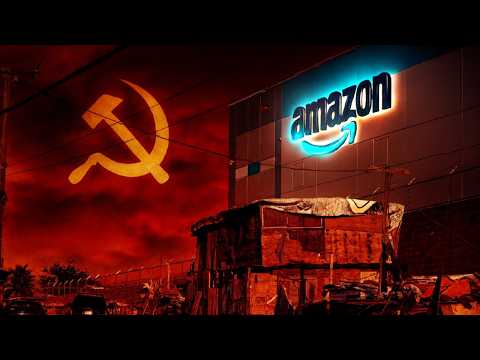
Amazon Created The Socialist Dream
 Watch on YouTube →
Overview
Art of the Problem traces how Stafford Beer’s vision of cybernetic coordination connected Soviet attempts at computer-planned socialism, Chile’s Project Cybersyn, and today’s algorithm-driven corporations. Cybersyn linked 150 factories in 1972, but after its destruction in the 1973 coup, similar automated coordination grew through the internet and platforms such as Amazon, Facebook, and YouTube—with profit and engagement, rather than social needs, guiding decisions.
Key takeaways
- Soviet computer-planning proposals such as OGAS foundered less on computing limitations than on political resistance: party officials were unwilling to transfer authority to an algorithm.
- Project Cybersyn showed how cybernetic feedback could coordinate production across 150 Chilean factories using telex machines and a central computer, with factory alerts prompting responses without a central human coordinator.
- Corporate hierarchies used profit targets and metrics to coordinate decisions across levels, while bringing suppliers and logistics inside companies reduced reliance on external markets.
- Amazon, Google, and Apple became more than online businesses by controlling marketplaces and access points, allowing algorithms to shape what users could find, buy, or distribute.
- Netflix recommendations, Facebook’s ranked timeline, and YouTube’s neural-network recommendations replaced human curation with behavioral-data-driven decisions, often increasing engagement or watch time.
- Algorithmic coordination depends on its objective: profit, engagement, or a human-designed social goal can produce very different outcomes, while increasingly capable systems may make decisions people cannot easily understand.
Chapters
0:00
Stafford Beer, Military Command, and the Soviet Computer-Planning Dream
- World War II command centers coordinated information through hierarchies and war rooms, inspiring Stafford Beer to see organizations as nervous systems.
- Beer saw military resource planning as evidence that centralized coordination could work when people shared a clear objective.
- After Stalin died in 1953, Soviet planners proposed computer-managed alternatives; projects including the 1959 Red Book and 1962 OGAS failed because officials would not surrender decision-making power.
- The Soviet economy also struggled with interdependent production needs and unreliable factory reports, problems a single central planner could not readily solve.
6:20
Corporate Profit Signals Automate General Motors’ Hierarchy
- General Motors coordinated hundreds of thousands of workers across plants using profit targets, efficiency metrics, and production bonuses.
- As companies brought steelmaking and trucking in-house, internal hierarchies absorbed work previously coordinated through outside markets.
- Cost-cutting drove automation upward from physical labor and paperwork toward decision-making, once considered a human-only domain.
- Salvador Allende’s 1970 election in Chile set up a real-world test of whether cybernetics could help coordinate a nationalized economy.
10:40
Project Cybersyn Connects Chile’s Factories Through Cybernetics
- Technology minister Fernando Flores invited Beer to apply cybernetics: measurements would trigger responses directly, like a thermostat switching on heat.
- Project Cybersyn connected 150 factories using existing telephone lines, telex machines, and a central mainframe.
- By 1972, the network could route factory alerts to suppliers and dispatch trucks without waiting for a human coordinator; it eventually had more than 500 subscribers.
- Beer proposed extending the system to homes so citizens could register responses to government policy, but the September 11, 1973 coup shut Cybersyn down.
15:30
ARPANET, Amazon, and the Rise of Platform-Controlled Markets
- ARPANET used packet switching and alternate routes to keep communications working if a network connection failed, building distributed infrastructure rather than a single control center.
- Companies built services on the public internet, using market prices as automatic signals to coordinate supply and demand.
- Amazon used online activity to inform choices about inventory, suppliers, and prices, then grew from an online bookseller into a marketplace.
- Google’s search and advertising systems and Apple’s App Store also made companies gatekeepers to markets and user experiences.
19:00
Netflix, Facebook, and YouTube Turn Human Judgment into Algorithms
- Netflix replaced manual movie curation with collaborative filtering based on the viewing patterns of users with similar tastes.
- Facebook’s 2009 timeline ranked posts to increase engagement; YouTube later used neural networks to recommend videos, raising watch time despite user complaints.
- Smartphones supply constant behavioral data through clicks, views, and purchases, while prediction markets such as Kalshi feed political signals back into public decisions.
- Beer’s coordination vision now operates at global scale, but its goals are often profit or engagement; the chapter closes by raising concerns about human control as AI systems become more capable.
Summary, takeaways, and chapters were generated by AI from the video's transcript and may contain errors. The video belongs to its creator, Art of the Problem.