A Short Story About Why You Cannot Buy A House
 Watch on YouTube →
Overview
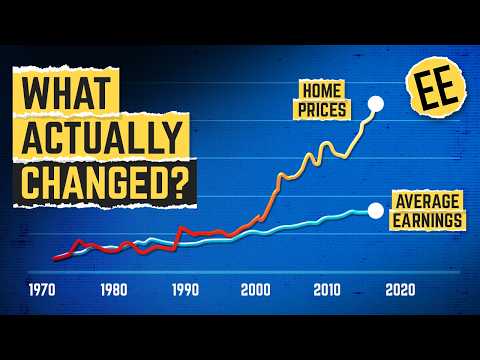
Economics Explained details how housing affordability has drastically declined globally, with typical home prices now exceeding 5 times household income, compared to 3 times historically. This shift, driven by treating housing as an investment vehicle fueled by excess capital and limited supply due to restrictive zoning, has led to delayed family formation, reduced job mobility, and increased wealth inequality. Solutions proposed include increasing land supply, loosening zoning, and taxing speculation, as demonstrated by examples from New Zealand, Minneapolis, Singapore, and Taiwan.
Key takeaways
- Globally, 95 major cities are now unaffordable, with typical home prices exceeding 5 times household income, a significant increase from the historical norm of 3 times.
- Restrictive zoning policies, intended for environmental and aesthetic reasons, have created artificial scarcity, driving up housing costs beyond construction and labor expenses.
- The shift of housing from a basic need to a global investment asset, fueled by excess capital from wealthy individuals and institutions, has dramatically inflated prices.
- Stagnant real wage growth for middle-income earners since the 1990s, coupled with rising housing costs, has made homeownership unattainable for younger generations.
- Government subsidies for first-time homebuyers, without corresponding increases in housing supply, have inadvertently intensified competition and driven prices higher.
- Potential solutions involve increasing land supply through zoning reform (e.g., New Zealand, Minneapolis), direct public housing provision (e.g., Singapore), and taxing speculative investment (e.g., Hong Kong, Wales).
Chapters
0:00
Global Housing Affordability Crisis: The Median Multiple
- Historically, a typical house cost 3x typical household income; now it's over 5x in 95 major cities.
- Cities like Hong Kong, Sydney, and Vancouver have price-to-income ratios of 9-14x.
- Beijing and Shanghai exceed 20-30x, with 12 cities labeled 'impossibly unaffordable' (over 9x income).
- The Demografia International Housing Affordability Report uses the Median Multiple to track affordability.
7:29
Drivers of Unaffordability: Investment Demand and Supply Restrictions
- Housing shifted from shelter to a global investment strategy, attracting wealthy individuals and corporations.
- Restrictive zoning (height caps, parking minimums) artificially limits housing supply, increasing costs.
- Falling interest rates and surging global cash supplies (post-1990s) fueled capital into real estate.
- Institutional buyers, foreign investors, and pension systems treat real estate as a safe, inflation-hedging asset.
10:41
Diverging Wages, Increased Debt, and Proposed Solutions
- Middle-income wage growth stagnated since the 1990s due to trade, automation, and offshoring.
- Dual-income households did not improve affordability; prices rose to match increased earning potential.
- Governments' short-term fixes like buyer grants exacerbate competition without increasing supply.
- Solutions include New Zealand's 'Going for Housing Growth' (zoning reform), Minneapolis/California's loosening of single-family zoning, Singapore's public housing, and taxes on speculation in Hong Kong/Wales/Taiwan.
Summary, takeaways, and chapters were generated by AI from the video's transcript and may contain errors. The video belongs to its creator, Economics Explained.