3 Minute Thesis Competition 2026
 Watch on YouTube →
Overview
This 3 Minute Thesis Competition features research across various mathematical disciplines. Topics include using machine learning to accelerate high-fidelity simulations for spacecraft re-entry heat shields, mathematical modeling of ice cap collapse due to climate change, parameter-free accelerated gradient descent for optimization, accelerating eigenvalue problems with subspace recycling, extending percolation theory to Gaussian fields, developing robust causal inference methods with imperfect instruments, and exploring approximate axiomatizability in continuous logic for metric structures and C* algebras.
Key takeaways
- Machine learning, specifically mixture density networks, can accelerate high-fidelity simulations for spacecraft re-entry by 10x, improving astronaut safety.
- Mathematical modeling demonstrates the Barnes Ice Cap is on an irreversible collapse trajectory due to climate change, requiring significant cooling to survive.
- Parameter-free accelerated gradient descent (PFAGD) achieves optimal convergence rates in optimization without needing problem-specific parameters.
- Eigenvalue problem acceleration uses subspace recycling and smart cropping techniques to efficiently analyze large, sequential matrices.
- A new causal inference method uses median-based selection to identify reliable instrumental variables, enabling robust causal effect estimation with imperfect data.
- Continuous logic provides a framework for axiomatizing metric structures and C* algebras, leading to approximate axiomatizability for various subclasses.
Chapters
- Research aims to accelerate computationally expensive simulations of spacecraft re-entry heat shields.
- Current methods struggle with rarefied gas dynamics at Mach 15, requiring particle-based simulations.
- Machine learning, specifically mixture density networks, is used to model molecular collision outcomes, achieving a 10x speedup.
- This work is intended to improve astronaut safety during return to Earth.
- A mathematical model treats ice as a viscous, non-Newtonian fluid to predict the collapse of the Barnes Ice Cap.
- The model incorporates ice thickness evolution, mass balance dependent on altitude and temperature, and climate forcing.
- Historical data from 1970-1984 is used as a reference state.
- The model shows the ice cap requires a -0.01°C climate forcing to survive, indicating it is on an irreversible collapse trajectory due to current global temperatures.
- Research introduces PFAGD, a deterministic, parameter-free first-order optimization algorithm.
- It achieves the optimal rate of epsilon^(-5/3) without requiring knowledge of problem smoothness constants.
- Key techniques include backtracking for adaptive curvature estimation and momentum recalibration with restarts.
- PFAGD outperforms other practical accelerated algorithms and is a viable alternative to non-linear CG for non-convex optimization.
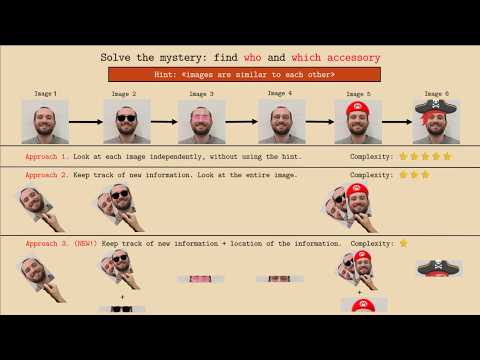
- Subspace recycling and row subsampling are used to accelerate sequences of eigenvalue problems, analogous to image recognition tasks.
- This method avoids scanning entire matrices by remembering past solutions and relevant data locations.
- Percolation theory research extends results from Bernoulli percolation to the more complex Gaussian percolation model.
- The goal is to understand phase transitions in Gaussian fields and potentially show universality for scaling limits of interfaces.
Summary, takeaways, and chapters were generated by AI from the video's transcript and may contain errors. The video belongs to its creator, Oxford Mathematics.